It is the first question most parents ask when choosing a coding course: should my child start with Scratch or Python? The short answer is: it depends on their age and confidence. Here is how we break it down.
Scratch: the language of younger beginners
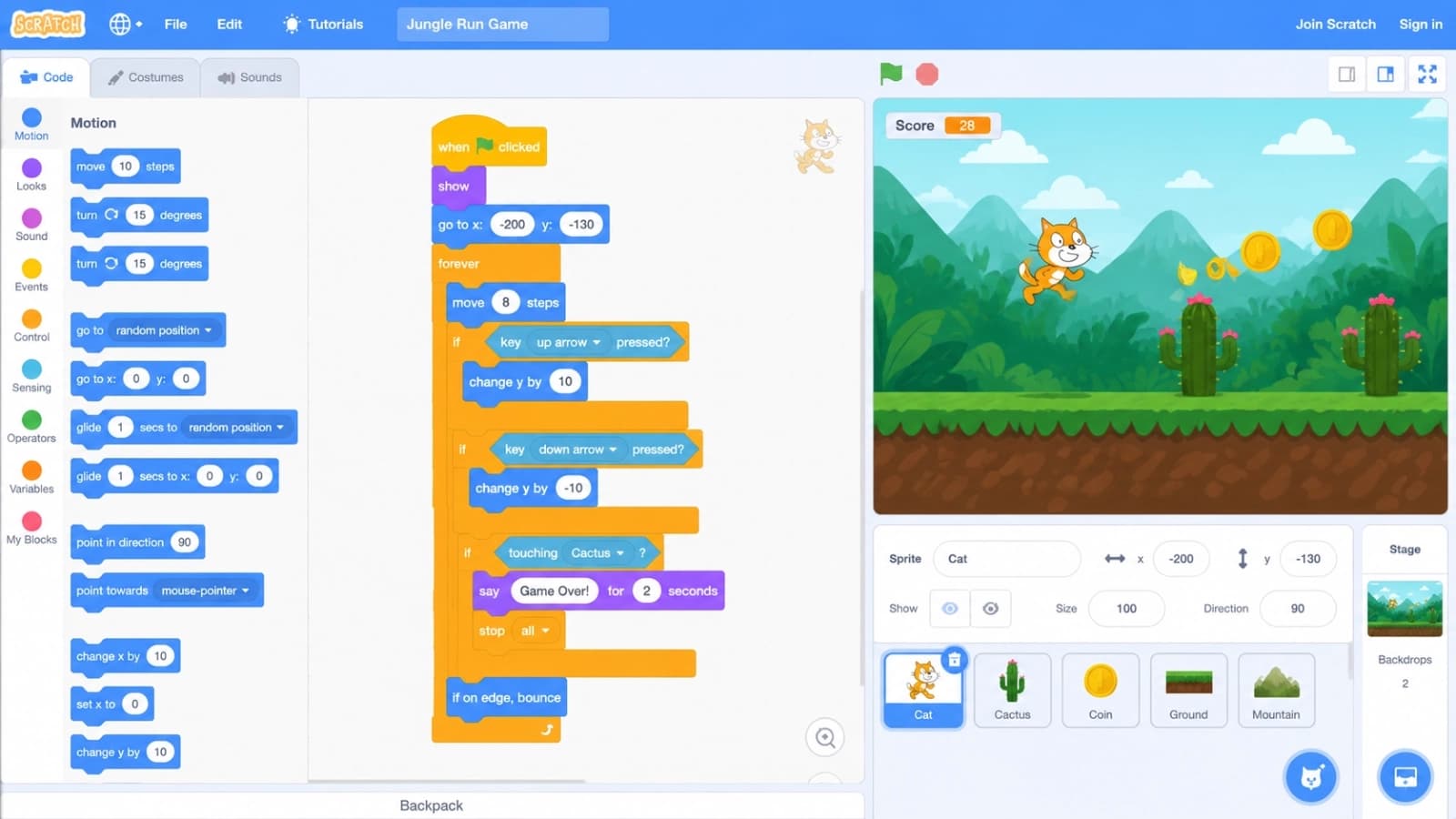
Scratch is visual. Instead of typing, children drag coloured blocks that represent commands. There are no syntax errors — a block simply snaps into place. This removes frustration and lets young learners (roughly 7–10) focus on logic: sequencing, loops, conditions and variables. In a few sessions, a child can create an animated story or a simple game they can share with friends.
Python: the language of real software
Python is a real, text-based programming language used by companies like Google and Netflix. It reads almost like English ('print', 'if', 'for'), which makes it beginner-friendly for older kids and teens (roughly 11+). Python teaches typing discipline and prepares learners for advanced fields — web development, AI and data science.
A common path: start with Scratch, graduate to Python
Many of our learners do exactly this. Scratch builds the logic; Python builds the craft. A child who already understands loops and conditions in Scratch picks up Python much faster, because they already know the concepts — they only need to learn the new spelling.
Which one for your child?
Age 7–10 with no experience? Start with Scratch. Age 11+ or already comfortable with logic? Go straight to Python. Not sure? Try both in a free trial — the right fit usually becomes obvious in a single session.
Python Programming (11+)
Live online Python for ages 11+ — from your first line of code to games, quizzes and mini-applications.
Read article